On June 20, “Field of Impressions,” the Foundation’s museum and exhibition space bringing together leading cultural institutions fr om across the country, opened at Afisha Picnic at the Kolomenskoye Museum-Reserve. Festival guests had an opportunity to discover museums through play, exploration, creativity, and participation, while the museums themselves were able to venture beyond their usual venues and meet new audiences in a new context.
Daria Tishkova's curatorial concept transformed the space into a kind of "museum carousel":
The name 'Field of Impressions' came fr om an association with Yegor Letov's iconic album Russkoe Pole Eksperimentov (Russian Field of Experiments) and with the very nature of the festival. Afisha Picnic traditionally takes place on a large field in the Kolomenskoye estate park — itself, incidentally, an open-air museum — wh ere people constantly switch between music, food, conversations, new encounters, and unexpected discoveries. I wanted the museum zone to exist within this flow not as a separate educational pavilion that visitors would have to deliberately seek out and prepare to engage with culture, but as another vibrant festival attraction: a space wh ere they could stop, join a game, feel something, remember something, notice something, and perhaps encounter a particular museum for the first time.
That is why I turned to the image of an amusement park. A museum also works with attention and impressions, except that its attractions are somewhat more complex. They may connect with memory, differences between people, how a city works, technology, a personal collection, or a cultural tradition. This is how 'Attraction of Memory,' 'Attraction of Difference,' and 'Attraction of Attention' emerged as thematic routes within the zone.
When selecting the institutions, it was important to me to represent the museum landscape in all its diversity. The project brings together major federal museums, private institutions, and small thematic museums, which often possess incredible energy and communicate with their audiences with remarkable precision. They are very different, and for me, that is precisely where the project's value lies. I did not try to bring them into a single format but instead invited each to find its own way of interacting with visitors.
With the Foundation's support, the festival gave museums an opportunity to reach beyond their usual audiences and meet people who had not planned to visit a museum. This is a very important situation. There is no need to begin the encounter with the date the institution was founded or a detailed account of its collection. It can begin with a game, the light of an old city streetlamp, a digital footprint, a comic, an arcade machine, or a question about what your own museum might look like.
Events like this help museums become more open and bolder in their choice of language. This does not mean simplifying content. Rather, we are looking for a new point of entry into a complex subject. A powerful impression does not end when someone leaves the pavilion. It can stay with them and one day lead them to the museum itself. For me, 'Field of Impressions' is exactly about this: the possibility of experimentation, of a chance encounter that later becomes a genuine cultural experience.
Visitors to the museum and exhibition zone had no single route or prescribed way to engage with culture. Each could choose their own path — send a postcard fr om a literary museum, explore urban communications with media artists, play Soviet arcade machines, create a collective art object, or discover the work of contemporary artists.
The project's main outcome was not just its packed program. "Field of Impressions" demonstrated how profoundly the role of the museum in the modern city is changing.
Until recently, a museum was perceived primarily as a static space that visitors came to. Today, the opposite is increasingly true: the museum itself reaches out to people. Almost all participants in "Field of Impressions" spoke about the importance of contemporary cultural institutions becoming part of the urban environment, participating in public life, and seeking new ways to communicate with audiences.
For the V. I. Dahl State Museum of the History of Russian Literature, participating in the festival was an opportunity to meet a young audience with whom the museum is only beginning to build a dialogue. The museum presented the "Veshch Tebe (Something for You)" project, implemented with the Foundation's support and dedicated to rethinking the museum souvenir as an extension of the cultural experience. Visitors could create and send a postcard directly fr om the festival, turning a memory of the event into a personal story.
The team of the Shchusev State Museum of Architecture expressed a similar idea. In their view, if a museum simply waits for visitors within its walls, it risks missing important encounters. Major urban events allow people to discover a new institution by chance — they may come to a festival for music or leisure and unexpectedly become interested in architecture, history, or art. At Afisha Picnic, the museum invited guests to talk about their favorite buildings and places that had left a mark on their lives. The visitors' personal stories gradually formed a collective map of memories, demonstrating just how deeply architecture is intertwined with each person's everyday experience.
The Museum of Moscow invited festival guests to take a fresh look at the history of the capital. In its zone, visitors could discover who they might have been in Gilyarovsky's Moscow. The museum team created a short quiz that helped visitors determine which type described in the works of journalist Vladimir Gilyarovsky in the late 19th and early 20th centuries they most closely resembled. They could then create their character using small figures and outfits. The resulting "doll" could either be taken home or attached to an improvised map of Moscow, making it possible to see which types predominated in different districts and to continue exploring the city right at the festival.
According to Mira Teslenko, Deputy General Director for Development at the Museum of Moscow, it is particularly important for a city museum to create unexpected points of contact with the city's culture and history. Teslenko also shared her delight at interacting with visitors to the museum zone:
It was especially wonderful to hear so many guests say that they love our institution and know our projects well. And those who had never visited us before said that they would now definitely come to our museum. That is a real joy for us!
For the Cryptography Museum, participating in the festival was a continuation of its own research mission. The museum studies the history of communication and ways of transmitting information and therefore regards the very process of communicating with the city and its residents as part of its work. The "Gorod Govorit (The City Speaks)" project presented at the festival explored the hidden mechanisms of urban communication through multimedia installations, artistic research, and guided tours. This format made it possible to talk about technology and the digital environment not in the language of specialists but through an experience of interacting with the city that everyone can understand.
The Jewish Museum and Tolerance Center also developed the idea of creating a space for dialogue. At the festival, it presented the "KulMiksy (Culture Mixes)" project, created together with teenagers. Through graphic novels, animation, games, and creative activities, visitors could explore cultural diversity, empathy, and mutual understanding. The museum notes that today it is particularly important to make conversations about tolerance and inclusion part of everyday urban life rather than confining them to exhibition spaces.
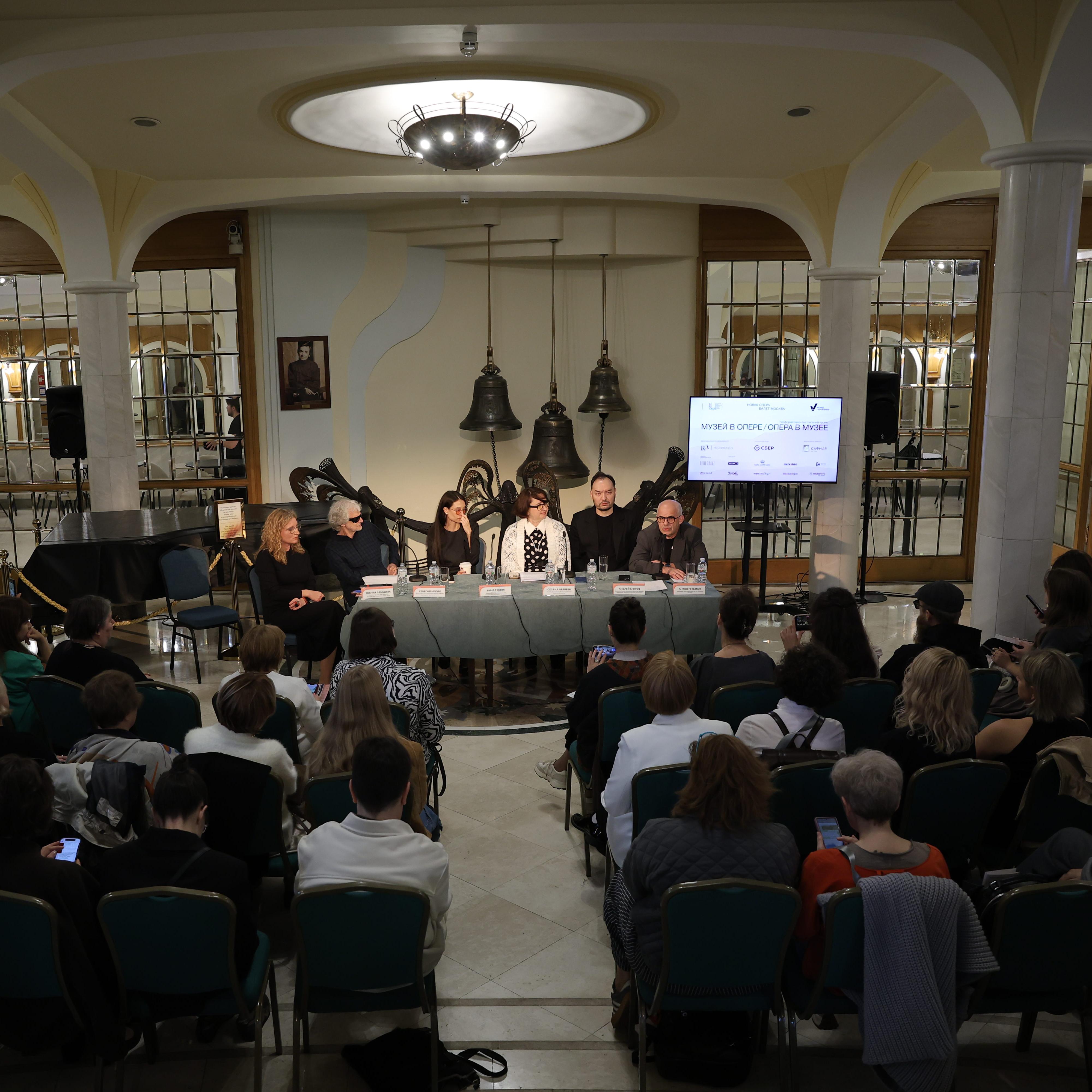
The theme was continued by the "Muzey v Muzee (Museum in a Museum)" project, presented by the State Tretyakov Gallery together with Dobry Muzey (Kind Museum). Its creators were artists with developmental disabilities who created their own museum spaces fr om personal memories, collections, and meaningful objects. The project offered a new perspective on the very concept of a museum: it can exist not only in a historic building or a major institution but also in a family archive, a collection at home, or personal stories. In the open festival environment, this conversation proved particularly natural and accessible to the widest possible audience.
Many projects at "Field of Impressions" were built around immersive experiences. Visitors did not simply observe what was happening but became full participants in the cultural process. Together with the All-Russian Decorative Art Museum, they explored contemporary interpretations of traditional crafts, learned weaving and embroidery techniques, created decorative objects, and discovered how cultural heritage can exist within a contemporary artistic context. According to the museum team, such formats help create new spaces for cultural exchange and collaborative creativity, in which a museum becomes not only a custodian of collections but also an active participant in urban life.
At the Ogni Moskvy (Moscow Lights) Museum, guests took part in a genuine investigation into the history of old city streetlamps. The "Detektiv ot Fonarya (Streetlamp Detective)" project, a winner of the Vladimir Potanin Foundation's "Industrial Experiment" competition, invited participants to work together to find answers to questions about the origins and history of surviving industrial heritage objects. Meanwhile, the Museum of Soviet Arcade Machines once again brought its exhibits back into the urban environment — the very setting wh ere the history of arcade machines in the Soviet Union began. Visitors could not only see the legendary Morskoi Boi (Sea Battle), Hockey, and Basketball machines but also experience the same emotions as their first players did decades ago.
A special place in the museum zone was occupied by a joint project of the Rodchenko Art School and Multimedia Art Museum, Moscow. This year, the Rodchenko Art School celebrates its 20th anniversary, and its participation in Afisha Picnic gave it an opportunity to introduce contemporary art to an audience that does not always visit exhibitions and biennials. The exhibition, created jointly with the Foundation, brought together artistic practices, technology, and the festival's natural environment. According to Irina Uspenskaya, Director of the Rodchenko Art School, for many guests the project became their first encounter with emerging art and sparked lively interest among visitors of different ages.
At the same time, "Field of Impressions" became a platform not only for introducing audiences to culture but also for communication among the institutions themselves. Artists, curators, museum professionals, and representatives of educational projects could exchange experience, discuss ideas for future collaborations, and identify new points of interaction. The space therefore operated on several levels at once: it helped museums find new audiences while also creating conditions for developing the professional community.
Contemporary museums are increasingly moving beyond their own spaces and becoming part of the urban environment. For the Vladimir Potanin Foundation, it was important to create a platform wh ere different cultural institutions could meet new audiences and present their projects in an open and accessible format. 'Field of Impressions' brought together museums with very different profiles and demonstrated that interest in culture is generated not only in exhibition halls but also through personal experience, participation, play, and collaborative creativity. It is precisely these formats that help museums remain a living part of the contemporary city," said Oksana Oracheva, General Director of the Foundation.
"Field of Impressions" became a space wh ere the museum was not a separate institution but part of a broader urban conversation — one that will continue in August at Afisha Picnic in St. Petersburg. The Vladimir Potanin Foundation will provide further information about new projects and participants.
 Logo
Logo